
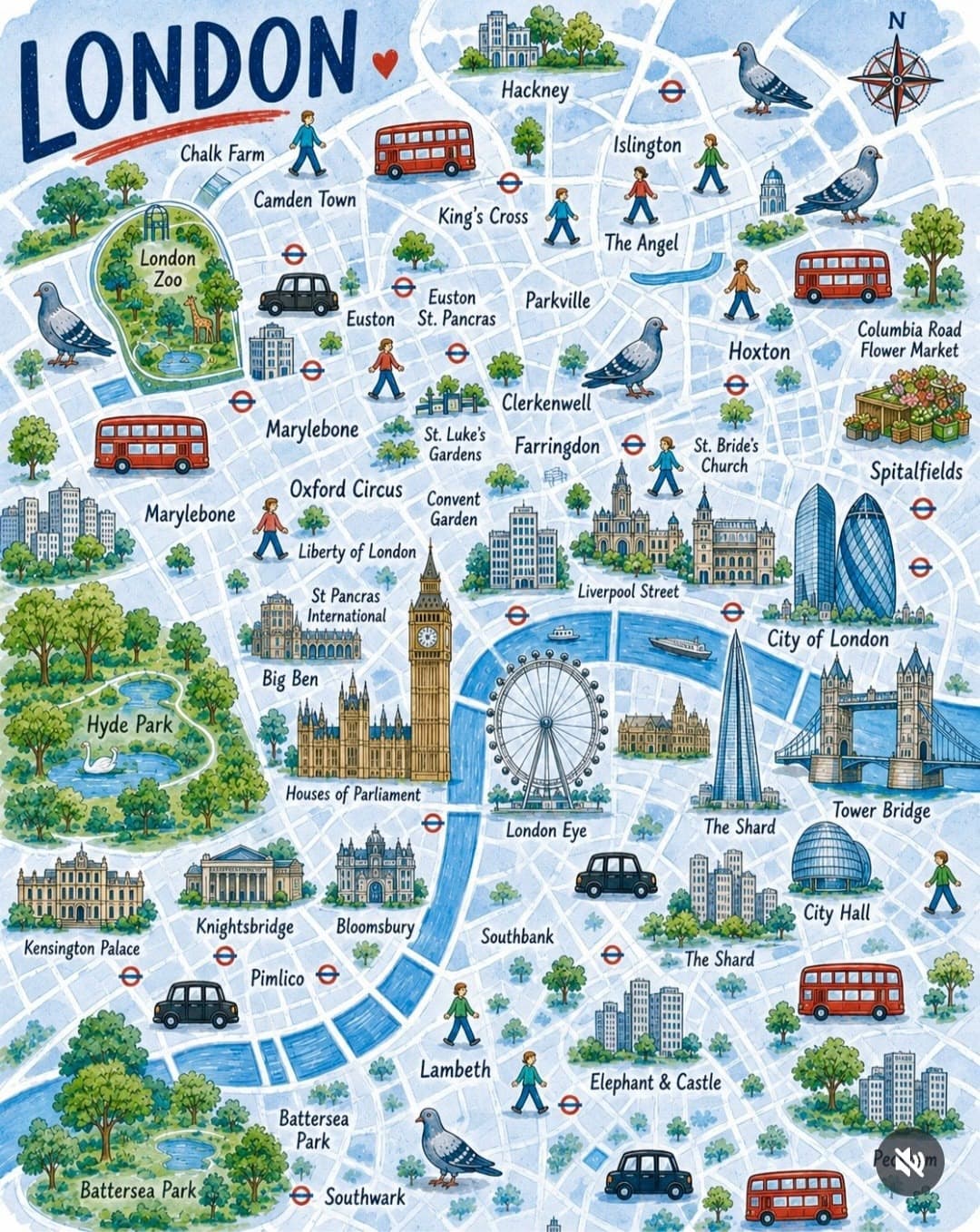
There are London arguments that nobody ever really wins.
North versus South.
Tube versus bus.
Which side of the escalator tourists should stand on.
We're not going anywhere near those.
Instead, here's a more useful question for somebody looking for their next home:
Would your life work better in East London or South London?
Not which is "better."
Which feels more like you?
East London: connected, changing, energetic
East London can change character within a few stops.
Around Stratford, you have major transport connections, large-scale development, shopping and the open spaces surrounding Queen Elizabeth Olympic Park.
Move towards Hackney and the atmosphere becomes more independent and residential.
Continue towards Shore ditch and you're much closer to the restaurants, bars, creative businesses and nightlife associated with the City fringe.
Then there is Canary Wharf—a completely different version of East London, with modern apartments, waterside spaces and one of the capital's major business districts.
East works particularly well for people whose lives already point east: work around Canary Wharf or the City, university campuses in the area, or friends and routines based nearby.
South London: neighborhoods with their own gravity
Cross the river and London changes.
Places such as Greenwich, Canada Water, Peckham, Clapham and Brixton aren't interchangeable—and that's exactly the point.
Greenwich combines historic London with riverside living and substantial green space.
Canada Water has been changing rapidly and provides strong connections towards Canary Wharf.
Peckham has built a reputation around food, independent businesses and creative culture.
Clapham has long attracted young professionals looking for parks, restaurants and connections into central London.
Brixton brings its own combination of music, food, markets and nightlife.
Don't choose by postcode prestige
People sometimes begin a property search with a list of areas they've been told are desirable.
We'd turn that around.
Start with your week.
Where do you need to be on Monday morning?
Where do you usually meet friends?
Do you work from home?
Do you want nightlife outside your door or somewhere quieter to return to?
Do you need a large supermarket nearby?
A park?
A gym?
A late train home?
Once those questions have answers, the map becomes much easier.
Test the commute properly
A direct train is often more valuable than a shorter distance.
London doesn't operate in straight lines.
A property that looks further from your workplace may actually give you a simpler journey than somewhere geographically closer.
Check door-to-door travel—not just station-to-station.
And if you're serious about the property, make the journey once before signing.
Our favorite test is much simpler
Stand outside the property and ask yourself:
Could I happily come back here after a long day?
Because eventually the new restaurants stop being new.
The exciting move is finished.
Your friends have seen the flat.
Then you're simply living there.
That's why choosing an area isn't really a property decision.
It's a lifestyle decision with a postcode attached.
DISCLAIMER- THE PHOTO HAS BEEN TAKEN FROM PINTEREST ( REBECCA CLARK) 

